Every functional and integrative practitioner hits the same wall. To grow, you have to be seen. But the second you start putting yourself out there, a quiet fear kicks in. What if I say the wrong thing? What if a post gets flagged? What if being bold online turns into a legal problem?
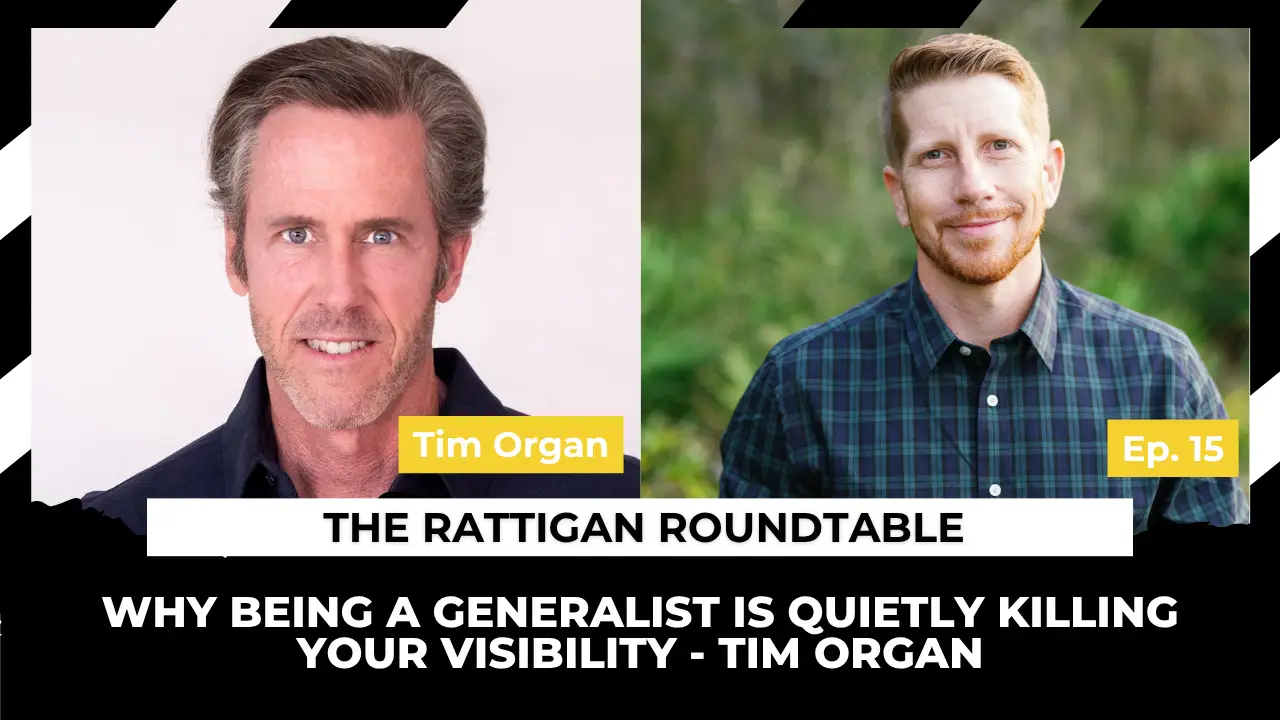
This week, I sat down with Tim Organ, CEO of the Health Business Growth Collective, the professional brand behind JJ Virgin. Tim spent over three decades in healthcare before spending the last ten helping practitioners build businesses that don’t burn them out. We covered a lot of ground, niching, community, getting found by AI, but we kept circling back to the line I care about most: the difference between a bold statement and a health claim.
Community is the new competitive advantage
Tim’s core message is that you don’t figure this out alone. The real breakthroughs don’t come from adding one more funnel or posting a little more. They come from a room of people testing ideas alongside you. For a solo practitioner, that’s a relief. The pressure to have every answer yourself finally comes off.
The identity crisis, niche down or blend in
When Tim asks a practitioner who they serve and hears postmenopausal women, he calls that a big ocean, not a niche. The clearer you get about exactly who you help, the less you chase clients, because your message finally sounds like it’s speaking directly to them. They start finding you instead.
Be contrarian, but keep it a statement
Here’s where marketing meets compliance. Tim’s advice is to plant a flag. Take a point of view. Say what you actually stand for. A strong, contrarian statement cuts through the noise and gives people a reason to follow you.
But here’s the part every practice needs to hear. A contrarian statement is not a claim. “I believe women’s hormones should be treated differently, and here’s why” is a statement about what you stand for. “Come see me and you’ll feel better in three months” is a claim, and as Tim put it, the moment it’s month four and someone doesn’t feel good, you may have a legal problem on your hands.
The rule is simple. No guarantees in healthcare. Keep language general, avoid promising to treat or cure a specific disease, and when you’re not sure, run the caption through a filter, even an AI tool, and ask one question: is this a statement or a claim. Platforms are enforcing this more, and as Tim said, getting caught isn’t a matter of if. It’s a matter of when.
Getting found by AI, not just Google
Patients are already walking in with AI research in hand, and that isn’t going away. So the real question is how you get found by AI in the first place. Tim’s take: AI isn’t ranking who’s most famous, it’s looking for who’s real. That means consistent, genuine content focused on one specific thing, plus a presence in the places AI trusts. The more focused and consistent you are, the more likely AI is to point a nearby patient your way.
Done beats perfect
Tim’s message to camera-shy practitioners: you’ve built up a ton of knowledge, so go share it. It doesn’t need studio lighting or perfect hair. Raw and real converts better because it reads as authentic. Focus on the message, not the packaging.
To be clear, aim for clinically A+ work, always. But your marketing can often create tremendous returns with a solid B- effort.
Really look at it honestly and ask yourself, is the time and effort that it takes me to go from B- to A+:
- Diminishing returns? (Past a certain quality threshold, the final 10% difference in quality might not even be noticeable to the audience.)
- Better spent putting out MORE. (If it takes me 1 hour to produce a B- video/post/blog, and 4 hours to produce an A+ video/post/blog, should I put out four “really good” posts in the time it takes me to put out one “best practices” post?)
- Sustainable? (If each post takes 4 hours, that is 16 hours(two full days of effort) per month for a weekly cadence. Can I continue at that pace? Would I be more consistent if it was 4 hours per month?)
The bottom line
Getting known and staying protected aren’t opposites. You can be bold, take a stand, and build real authority, as long as you keep your boldest lines on the right side of the statement and claim divide.
Want a head start on the paperwork that protects your practice while you grow? Grab our free guide, Five Essential Documents Every Functional Medicine Doctor Must Have, and catch the full episode on YouTube, Spotify, or Apple Podcasts.
Listen and subscribe: Spotify | Apple Podcasts | YouTube | Amazon Music
